
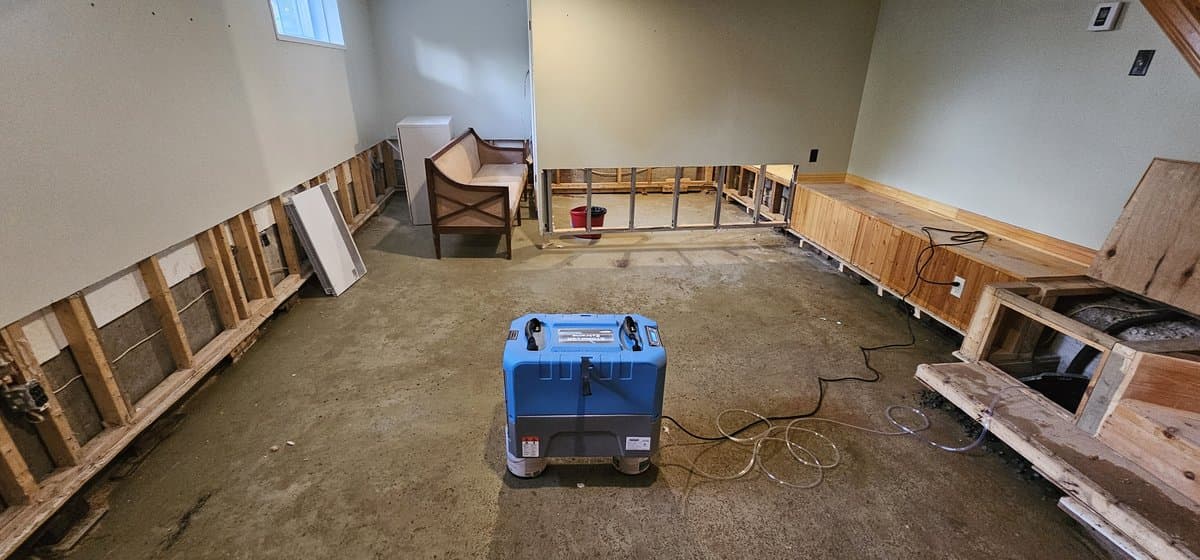
Two weeks after a flood, most homeowners feel like the worst is behind them. The water's gone, the wet furniture has been hauled to the curb, and the basement finally smells like bleach instead of a swamp. Then, sometimes a month or more later, a second wave shows up — a musty smell that won't go away, a dark stain creeping up a baseboard, or a patch of fuzzy growth behind a piece of furniture nobody moved since the flood. This is the part of flood damage that catches people off guard: mold doesn't always show up on day one, and by the time it's visible, it's usually been growing for weeks.
Why Documentation Matters More Than You Think
Whether or not you've filed a claim yet, documentation is the single biggest factor in how smoothly an insurance claim goes — and the biggest gap most homeowners leave behind. Dated photos and video taken as soon as possible after the water recedes, before any cleanup or demolition starts, are worth far more than photos taken after the fact. If you've already started cleanup, photograph what's left: stained baseboards, watermarks on walls, damaged flooring stacked for disposal. Keep every receipt connected to the damage — disposal fees, replacement materials, equipment rentals, and any professional assessment. If a contractor or restoration company gives you a written moisture reading or damage report, keep that too; it's exactly the kind of third-party documentation an adjuster looks for.
Sewer Backup vs. Overland Water: Why the Distinction Matters
In Quebec, home insurance policies typically draw a real distinction between water that backs up through a sewer or drain (sewer backup coverage) and water that enters from the outside, over the ground (overland water coverage). These are frequently sold as separate add-ons rather than being automatically included in a base policy, and the cause of your flooding can determine which coverage — if any — actually applies. This is general information, not advice on any specific policy: the exact wording, exclusions, and endorsements vary significantly from one insurer and one policy to the next. If you're unsure what your policy covers, the fastest way to find out is to ask your insurer or broker directly, ideally before you need to rely on the answer.
Why Cold Rooms and Finished Basements Hide Moisture So Well
Two areas consistently hide flood-related moisture longer than anywhere else in a home. Cold rooms are built with uninsulated concrete walls in direct contact with the ground outside, which means they run cooler than the rest of the basement and are prone to condensation even without a flood — after one, trapped moisture can sit there for a long time behind stored boxes and shelving. Finished basements have the opposite problem: drywall, insulation, and flooring cover up what's happening underneath and behind the wall, so a wall that looks fine from the living-room side can be hiding a soaked stud bay. In both cases, the areas most likely to develop a hidden mold problem are exactly the areas hardest to inspect just by looking.
Signs Mold Is Already Growing
A few signals are worth acting on right away rather than waiting to see if they get worse:
- A persistent musty or earthy smell that doesn't fade with ventilation
- Discoloration or dark staining on baseboards or the bottom of drywall
- Paint or wallpaper that's started bubbling or peeling near the floor
- Warped or soft baseboards that weren't like that before the flood
None of these guarantee a serious problem on their own, but together, or in a room that took on water, they're a reasonable trigger to get a professional opinion rather than a guess.
What a Professional Assessment Actually Covers
A proper mold and moisture assessment goes beyond a visual walkthrough. It typically includes moisture meter readings taken directly on and inside suspect materials, thermal imaging to spot temperature differences that indicate trapped moisture behind intact surfaces, and a visual inspection of accessible areas like cold rooms, behind furniture, and around baseboards. The result should be a written report you can keep for your own records or hand to an insurer — not just a verbal opinion on the day. For a related look at how mold findings can affect a home sale or purchase, see our guide on mold and insurance coverage.
Getting Ahead of It
If your home flooded this year and something still feels off weeks later — a smell, a stain, a soft spot — it's worth getting checked rather than hoping it resolves on its own. We offer free, no-obligation assessments across the West Island and Vaudreuil-Soulanges, using the same boroscope, moisture meter, and thermal imaging approach described above, and we provide a written report either way.
Dealing with water damage or suspected mold?
Call 514-943-5690 — 24/7 emergency response across the West Island and Vaudreuil-Soulanges.